A Lesson from the Weeping Prophet
“Why do You forget us forever? Why do You forsake us so long? Cause us to return to You, O Yahweh, that we may be returned; renew our days as of old, even if You have utterly rejected us and are exceedingly angry with us.”
I found myself beginning to weep as I read these words aloud during Bible study last week.
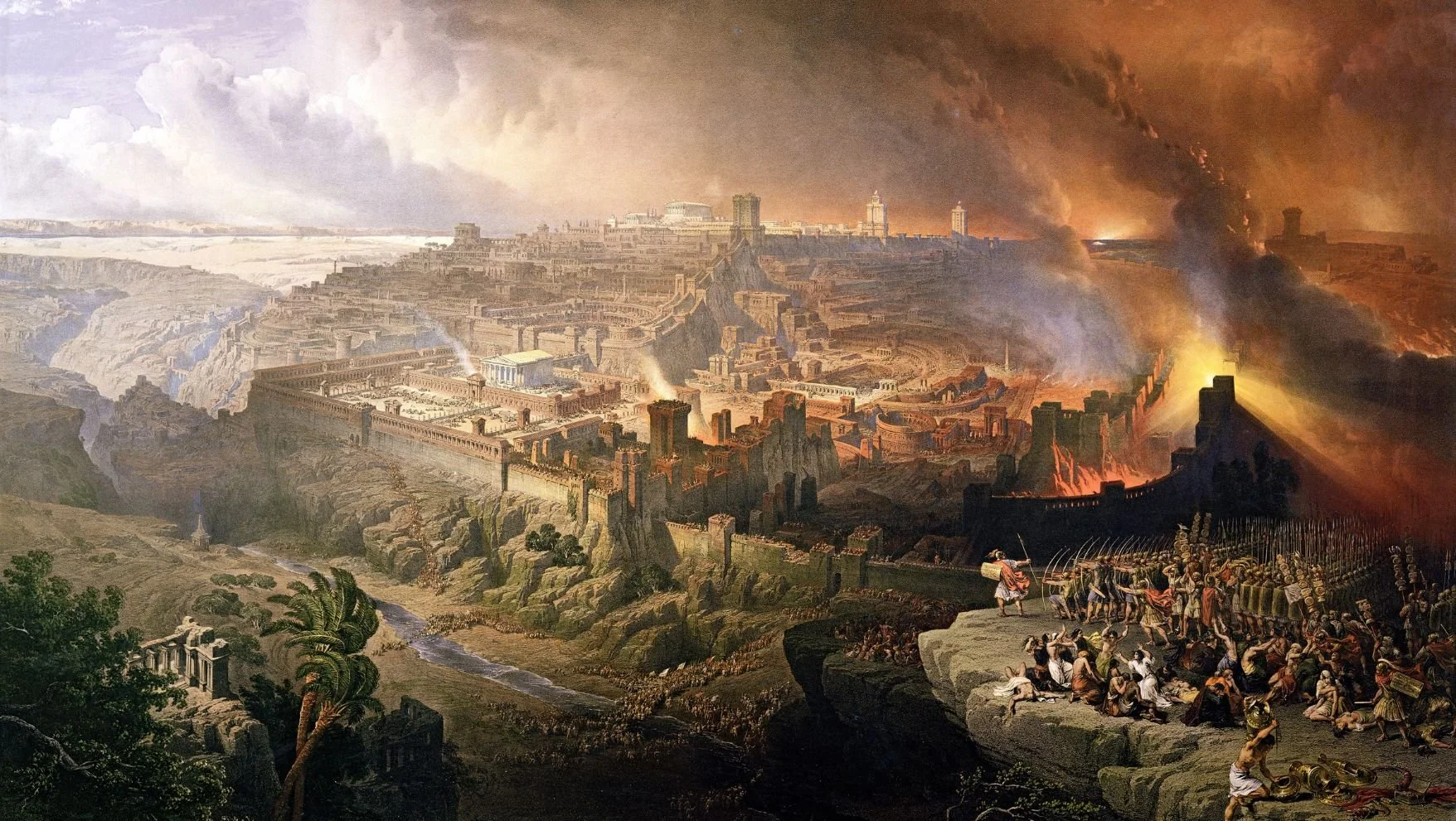
My tears shouldn’t be surprising. On one hand, I’m known for being a bit of a softy. It doesn’t take much to make me tear up, and my wife still teases me for crying at the end of Napoleon Dynamite. On the other hand—and on a more serious note—these words are the final verses in the Book of Lamentations, a book of five poems traditionally attributed to the prophet Jeremiah, written in the immediate aftermath of Jerusalem’s destruction in 586 BC. As the name of the book implies, the book is a lament: Each chapter examines Jerusalem’s destruction from a different angle, emphasizing the tragedy of the event itself while also explaining its necessity considering Judah’s continuous rebellion against their God. Worse still, Jeremiah was from Jerusalem. He was forced to watch the Babylonians carry his family and friends into captivity; he was present during the multi-year siege, an eyewitness to the levels of depravity to which humans will stoop in moments of desperation; he was there to watch the temple of God and the Holy City go up in flames before being leveled to the ground. Sure, he recognized it was necessary, but that didn’t make it easy. As a prophet, he recognized God’s justice. As a man, he was traumatized by the events he lived to see.
As such, the Book of Lamentations is easily the most heartbreaking, emotionally-exhausting book in the Bible. If it doesn’t make you cry, maybe you need to read it again.
But there’s a deeper reason behind my tears.
You see, throughout the book, Jeremiah has been pinballing back and forth between celebrating God’s justice and mourning the cost of that justice—namely, the destruction of His people. On one hand, he could declare, “The lovingkindnesses of Yahweh indeed never cease, for His compassions never fail. They are new every morning; great is Your faithfulness” (3:22-23). At the same time, this came only verses after portraying God as a warrior shooting him with arrows and beating him to a pulp. “He has broken my teeth with gravel; he has made me cower in the dust. My soul has been rejected from peace; I have forgotten goodness” (3:16-17). Because Jeremiah was the innocent observer watching as Jerusalem fell, he alone was sober enough of mind to appreciate the great and immense cost of sin.
This is why he is grieved beyond belief. He looks at the destruction of his people and laments that their downfall was their own doing. “The crown has fallen from our head; woe to us, for we have sinned!” (5:16). Despite giving lip service to God, their hearts and their actions testified to all the other things they worshiped in His place. As a result, Mount Zion lie desolate, the temple of Yahweh reduced to a heap of ruins (5:17-18). Most people might naturally conclude that a temple’s destruction implied that its god was not powerful enough to save it, but Jeremiah knew differently: “You, O Yahweh, sit enthroned forever; Your throne is from generation to generation” (5:19). Israel’s God had not been overpowered. Instead, from His throne in heaven He willfully allowed His throne on earth to be demolished.
Why? Because there is no greater evil than when God’s people choose to live in sin.
This, then, leads us to those final verses. “Why do You forget us forever? Why do You forsake us so long?” Jeremiah asks (5:20). He knows the answer, of course. He knows that the people will dwell seventy years in Babylon as punishment for their sins, because it is he who predicted it years before the city fell (Jer 25:11-12). But this doesn’t take away the pain of feeling forsaken. He recognizes their discipline is just, but that doesn’t make the discipline easy to endure. For this reason, he asks God to “Cause us to return to You, O Yahweh, that we may be returned; renew our days as of old” (5:21). Like the church in Ephesus, the people of Judah had abandoned their first love (Rev 2:4). Jeremiah knows that the problem lies with them, so He pleads with God to work on their hearts and help them return to Him. To give them true repentance. To give them faith to be strong and strength to be faithful.
But it is the final verse which gets me. Jeremiah doesn’t ask God to “Cause us to return to You” so that they can return from exile and experience prosperity in the land. He doesn’t ask God to “renew our days as of old” so they can experience an easy life free from trouble. He doesn’t even ask God to return them to their former relationship. Instead, he asks God to lead them to genuine repentance “Even if You have utterly rejected us and are exceedingly angry with us” (5:22).
It is on this dark, devastating, and even depressing note that the Book of Lamentations comes to an end. Jeremiah doesn’t wrap things up with a nice little bow or conclude with a hopeful finish. Instead, he ends the book with the most difficult verse of all: A verse entertaining the possibility of God abandoning His people forever.
Jeremiah knows, of course, that God hasn’t utterly rejected His people. He knows that God will, in due time, return to them and make things better than ever before. (It was he, after all, who prophesied that God would make a New Covenant with the people, enabling them to actually walk in obedience so that “I will be their God, and they shall be My people,” see Jeremiah 31:33.) But Jeremiah is doing what prophets do best: He is getting to the heart of repentance. Setting aside what he knows to be true, Jeremiah draws up a hypothetical scenario to challenge the heart of the reader. Even if they weren’t brought back to the land… Even if the temple wasn’t rebuilt… Even if the covenant wasn’t restored… Even if God’s anger never abated… Even if God rejected them forever… Jeremiah still prays for repentance.
Why? Because God is worthy of our allegiance. Moreover, genuine repentance isn’t fueled by selfish gain. It is fueled by a recognition that, once again, God is worthy of our allegiance. Even if we got nothing out of it, God is still worthy to be served.
This is what made me tear up. The words of Jeremiah pierced my own heart and challenged me with a question that I think we, as Christians, must wrestle through every single day. Why am I serving Christ? (Assuming, of course, that we are serving him. If we are not, we have a bunch of other questions to wrestle through.) Or again, Why do I long to daily repent and draw ever nearer to Him? Is it a desire for heaven? A fear of hell? A need to be cleansed of the penalty of my many sins? A longing to be reunited with my loved ones that have passed before me? A yearning to know unfathomable love, unbreakable joy, and unshakeable peace during these few fleeting days under the sun? What is my motive for being a Christian? Why do I go to church? Why do I read my Bible? Why do I deny myself and try to serve others? Scripture is constantly reminding us that God wants our hearts, not just our actions, and this final verse in Lamentations forces us to confront the motives of our hearts.
But there is still a more thought-provoking question raised by these verses. If these benefits weren’t part of the equation, would I still serve Christ? What if there was no promise of heaven? What if there was no deliverance from hell? What if there was no forgiveness of sins? What if I was never reunited with my loved ones after death? What if I would only know pain and hardship for all the days of my life? Praise be to God that we, like Jeremiah, know the truth of these things, but that should not allow us to avoid the questions altogether. Even if our relationship with God remained fractured forever, and even if nothing but destitution, disease, and disaster lay before us all the days of our life, would we still serve Him? Better yet, should we still serve Him?
According to Jeremiah, the answer is Yes. Even if we had nothing to gain, God is still worth serving because He is enthroned over all, and as such He is worthy of everything creation has to give. To echo one of the many songs which the Beloved Disciple heard sung in heaven, “Worthy are You, our Lord and our God, to receive glory and honor and power, for You created all things, and because of Your will they existed, and were created” (Rev 4:11).
Worthy are You, O Lord our God. Unify us, Your church, in obedience to You. May we give our devotion to You, may we place our trust in You, and may we ever set our eyes upon You. Help us love as You would have us love; help us live as You would have us live. Daily guide us into repentance, and may we hourly return to You—not because of what we get, but because You are worthy of all we have to give. Help us be part of the solution that this world so desperately needs—not for our fame nor for our fortune, but for Your glory Your glory alone. Amen.
-- David Tate, February 9, 2026


