The Gospel According to Telemachus

Last night I went and saw the Odyssey.
If, somehow, you’ve been living under a rock for the last 2,700 years, the Odyssey is Homer’s epic poem recounting, most famously, the manifold labors of Odysseus king of Ithaca ( mastermind behind the Trojan horse, played by Matt Damon in the new film) as he struggles, for ten years, to return home after the already ten-year-long Trojan War. He blinds a cyclops, hears the song of the sirens, spends several years sharing a bed with a goddess, and takes out the bad guys in an epic final-act confrontation. It’s all the stuff we love about Greek mythology.
More Than Mythology
But if you’ve ever read the Odyssey—and this is very much reflected in Christopher Nolan’s new film as well—you’ll recognize that the story is about much more than just epic adventures and fantastic beasts. In fact, of the 24 books composing the original poem, only eight (Books 5-12) actually focus on the king’s travels. The rest of it is focused on Ithaca itself—the kingdom to which he longs to return. In Ithaca, we meet a variety of different characters:
Telemachus, the youthful son struggling to grow into his father’s legacy
Penelope, the faithful wife preserving the household
Eurycleia, the loyal servant who remembers the true king
Eumaeus, the humble servant whose loyalty endures
Argos, the forgotten hound who endures to see his master’s return
The suitors, men consuming another’s house & trying to steal his bride
When it comes down to it, nearly every character in the poem functions around the central theme of recognizing or failing to recognize the true king. When Odysseus returns to Ithaca’s shores disguised as a beggar, those who faithfully awaited his arrival come to understand his identity and join in his victory:
Telemachus recognizes his father through maturity.
Penelope recognizes her husband through wisdom.
Eurycleia recognizes her king through memory.
Eumaeus recognize his lord through faithfulness.
Argos recognizes his master through loyalty.
By contrast, those who abused his servants and laid waste to his kingdom are kept in the dark until judgment arrives. The suitors do not recognize Odysseys until he identifies himself. By then, it is too late: The doors are locked and they have nowhere to hide. The one they thought would never return has returned indeed, to reclaim his throne and visit upon them in accordance with what they have done in his absence.
Father & Son
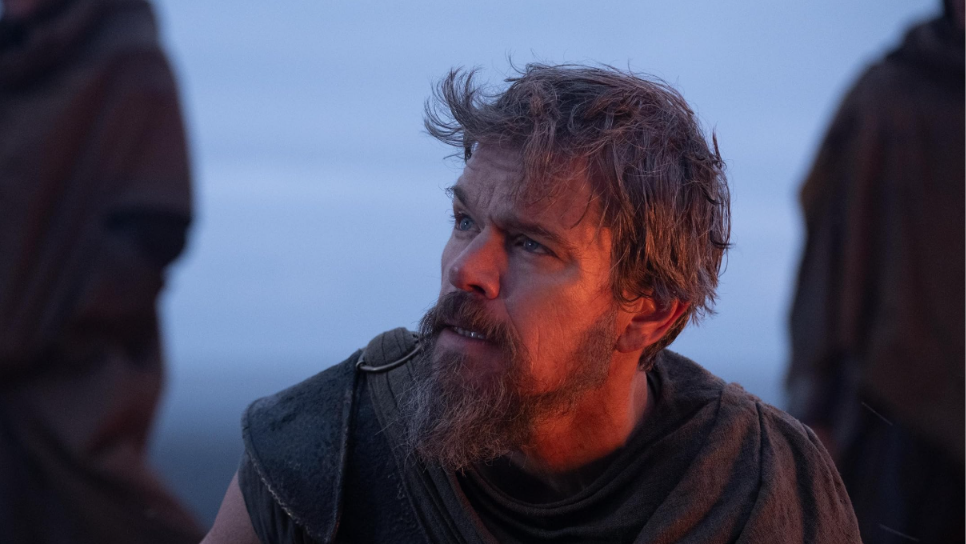
While Odysseus is certainly the main character of the Odyssey, every time I reread the poem I can’t help but think that his son Telemachus (played by Tom Holland in the new film) lies at the heart of the story. After all, the first four books of the poem don’t deal with the hero on his journey but with the son he left behind. Telemachus was a newborn when his father left for the Trojan War, and when the Odyssey picks up, the boy has spent the last twenty years yearning for a father he cannot remember, a king he cannot see. His father looms larger than life in the songs of the bards, but Telemachus himself has no memories of his father. Day by day he walks through his father’s hallowed halls, frustrated by the piggish, entitled suitors who pine for his mother’s affection yet feeling powerless to do anything about it.
When the poem begins, Telemachus is a young man trapped in his father’s absence, “heart obsessed with grief” (1.133), well aware of the fact that he is no Odysseus but doing everything in his power to honor his father’s legacy. Unsure of his father’s fate and grieved by the state of his father’s house, Telemachus rejects passivity and embarks on an odyssey of his own, setting out from Ithaca to search for news of his long-lost father. Athena, seeing the shift in the man, remarks the following:
Few sons are the equals of their fathers;
Most fall short, all too few surpass them.
But you, brave and adept from this day on—
Odysseus’ cunning has hardly given out in you—
There’s every hope that you will reach your goal. (2.309-313)
He first visits Nestor, king of Pylos, who can’t help but see the father resembled in the son:
Your father, yes, if you are in fact his son…
I look at you and a sense of wonder takes me.
Your way with words—it’s just like his—I’d swear
No youngster could ever speak like you, so apt, so telling. (3.137-140)
And so the story goes. Telemachus is no Odysseus, but when people encounter him they can’t help but notice he is very Odysseus-like. He travels land and sea for news of his father, and though few have seen him, everyone who knows Odysseus assures Telemachus that his father is alive and will be returning very soon. Sages speculate; prophets prophesy; goddesses make promises. And as the boy journeys, his hope only grows. The one whose heart was obsessed with grief becomes confident with faith.

This, of course, leads to the moment when father and son reunite. Back on Ithaca’s shores, the disguised king reveals himself to his son, and together they plot to restore all things into the father’s hand:
“Soon enough, father,” his gallant son replied,
“you’ll sense the courage inside me, that I know—
I’m hardly a flight, weak-willed boy these days.” (16.342-344)
Strengthened by his father’s appearance, the boy at last becomes a man and steps into the promises of his father. The poem still has a ways to go after this, the dynamic between Telemachus and his dad consistently draw me and become the highlight of each reread.
Homesick for the Tarrying King
To this, you may point out that the Odyssey has existed for nearly three millennia and I’m not exactly highlighting anything new that scholars haven’t already written about ad nauseum. And that’s a fair point. But here’s the thing: As I reread the Odyssey in preparation for the new movie—and as I sat in the theater last night—something about Telemachus’ story hit different than it has in the past.
I realized that Odysseus isn’t the only character in the story feeling homesickness; Telemachus is too. He’s homesick for a home he has not seen. Though his king tarries, Telemachus knows he is still out there. People try to convince him his king will never return, yet still Telemachus believes and governs his life by his commitment to that belief. Yes, he has moments of doubt; yes, he falls short in many ways; yes, time and time again he fails to live up to the overwhelming shadow cast by his father. But he never forsakes his yearning for his father’s returning, and not a moment does he lose sight of the fact that the fate of the kingdom rests in the hands not of himself or his father’s bride, but in his father himself.
Telemachus isn’t trying to replace Odysseus; he is simply trying to glorify his father’s name and guard his kingdom until his father’s return. Though he is young, naive, inexperienced, and in over his head, he devotes his life to protecting his mother and preserving his father’s house, shielding both from the self-serving suitors who pervert what is good and turn his father’s legacy into a mockery.
He has not seen his father, yet people see his father in him.
He longs for a home he has never truly lived in.
His home is found in the presence of the one he longs to see, in the presence of Odysseus. For most of the poem, Telemachus does not see Odysseus, but he loves him; though he doesn’t see him at the time, he believes in him and rejoices at the thought of his coming.
The Gospel According to Telemachus
As a Christian, I can’t help but think that Telemachus’ story is our story too.
None of us were alive 2,000 years ago when Christ walked the earth. Our memories of Christ, like Telemachus’ memories of his father, come not from personal experience but from secondhand testimony—not the ballads of bards or recollections of comrades, but the witness of the apostles and prophets, those who beheld and heard things of which our imagination can barely comprehend.
The Gospels recount stories not of cyclopes and sirens, but of calmed storms, multiplied food, and empty tombs—a tale not of hubris and honor, but compassion and selfless sacrifice. They speak of a King great than Odysseus who won a battle greater than that fought at Troy; a king who loves his bride more than Odysseus loves Penelope and will return to us, as Odysseus returned to Ithaca, to establish his throne and make all things new.
Like Telemachus, we see the King’s bride, the church, suffering beneath the pressure of many suitors, internal and external forces which long to usurp the Christ’s throne, claim His bride, and repurpose His kingdom for its own nefarious and self-serving purposes. Yet, like Telemachus, it is our job, as children of the King, to protect the bride and preserve the house, to prepare for the King’s return and to hope in His coming victory. “Though you have not seen Him, you love Him, and though you do not see Him now, but believe in Him, you rejoice with joy inexpressible and full of glory, receiving as the outcome of your faith the salvation of your souls” (1 Pe 1:8-9).
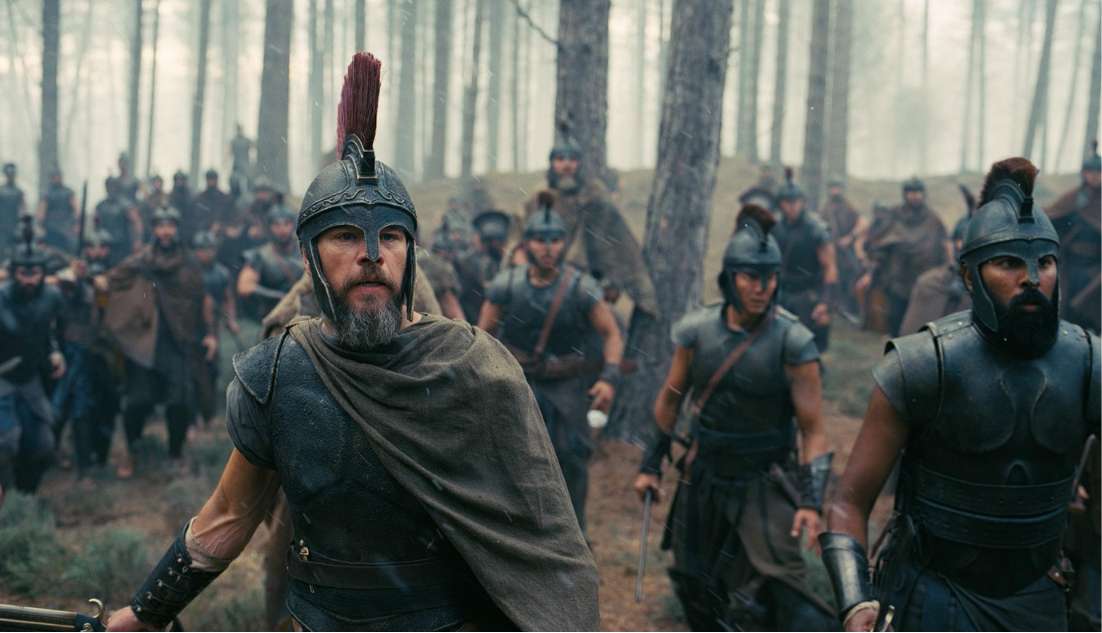
As Nestor saw Odysseus in the very words and countenance of Telemachus, so we, as Christians, long to live in such a manner that people see us and respond as did the Sanhedrin to the apostles: “They observed the confidence of Peter and John and comprehended that they were uneducated and ordinary men, they were marveling, and began to recognize them as having been with Jesus” (Ac 4:13). Like Telemachus, it is not our job to be the King, but it is our job to be like the King and prepare the people for His return.
Until then, like Telemachus, we ache for a home we have not seen. Our King may tarry a hundred times longer than Odysseus, yet still we are confident in our hope, for our King, unlike Odysseus, cannot die—death no longer has dominion over him. As crafty Odysseus emerged after several days from that wooden horse with victory in his hand, so too the crafty Christ emerged after several days from the rock-cut tomb with a greater victory that gives us greater confidence in his return.
He will not come as a beggar on the streets, but riding on the clouds of heaven. Every eye will see him, and woe to the man who finds himself in the locked room of the King when the mighty bow is strung and the arrow shot between the axes, for he “will repay to each according to his works” (Rom 2:6).
Until then, our job is to prepare for his arrival. To keep the Way, protect the Bride, and serve the King—for He is coming. Of that, we can be sure.